Sammy Marrero Wikipedia, Biography, Age, Cause of Death, Songs, Nationality, Net Worth, Wife, Family, Children

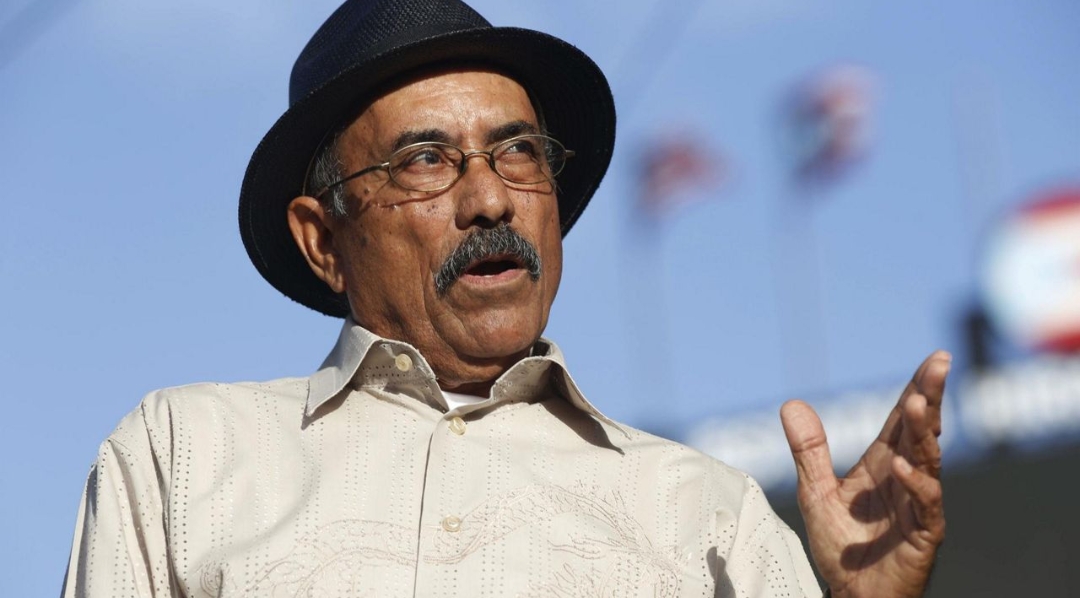
Sammy Marrero was an iconic Puerto Rican salsa singer, widely celebrated as the “Troubadour of Salsa” (El Trovador de la Salsa). Born on February 16, 1942, in Coamo, Puerto Rico, he became one of the most distinctive and emotionally resonant voices in Latin music. Marrero was best known for his extraordinary 44-year tenure as the lead vocalist for Orquesta La Selecta, a legendary salsa group directed by the late composer Raphy Leavitt.
Marrero’s career skyrocketed in 1971 with the debut of La Selecta and the release of the hit gold single “Payaso.” His powerful, verses-driven style defined the sound of the orchestra for over four decades, breathing life into foundational salsa classics such as “Jíbaro Soy,” “El Buen Pastor,” and the deeply emotional tribute song “La Cuna Blanca.” His unique ability to infuse deep storytelling and raw emotional depth into traditional salsa made him an irreplaceable figure across the Caribbean and mainland Latin America.
Following the death of Raphy Leavitt in 2015, Marrero parted ways with the orchestra to embark on a solo career. He launched his solo journey in 2016 with the inspirational track “Si me caigo me levanto” (“If I Fall, I Will Get Up”). This period of his life was marked by resilience, as he navigated a complex, five-year copyright lawsuit brought by Leavitt’s estate regarding the rights to perform the orchestra’s catalog, an issue that was finally resolved and settled in 2021.
Marrero passed away at the age of 84 on May 13, 2026, following a period of declining health. His death was officially confirmed by his family on May 17, 2026. Remembered by the National Foundation for Popular Culture as a humble man of unyielding loyalty and responsibility, Marrero leaves behind a massive 20-album musical legacy that continues to impact generations of salsa lovers worldwide.
Quick Facts & Profile Summary
Sammy Marrero Age, Birth, and Background
Sammy Marrero was born on February 16, 1942. At the time of his passing on May 17, 2026, he was 84 years old. Born under the zodiac sign of Aquarius, Marrero exemplified the creative, independent, and humanitarian traits often associated with the sign. For nearly eight and a half decades, his life journey was entirely defined by a relentless passion for vocal performance and an unyielding commitment to preserving the acoustic roots of Puerto Rican culture.
Nationality and Ethnicity
Sammy Marrero was of Puerto Rican nationality. Because Puerto Rico is an unincorporated territory of the United States, he held U.S. citizenship, allowing him to travel extensively throughout the mainland United States, Latin America, and Europe during his long touring career.
In terms of ethnicity, Marrero identified as a Hispanic / Latino individual with proud Afro-Puerto Rican roots. His musical identity was deeply anchored in Jíbaro culture—the traditional folk music of Puerto Rico’s mountain countryside. He seamlessly blended these traditional African and indigenous Taíno rhythmic sensibilities with modern urban salsa, creating a highly authentic vocal delivery that resonated deeply with the working-class people of the Caribbean.
Early Life and Roots in Coamo
Samuel Marrero González drew his first breath in the vibrant neighborhood of El Cerro, located in the southern mountainous municipality of Coamo, Puerto Rico. Coamo is historically recognized as one of the oldest settlements on the island, rich in cultural traditions, thermal springs, and folklore. Growing up in El Cerro, young Sammy was completely immersed in the sounds of traditional Puerto Rican string instruments, particularly the cuatro, and the poetic vocal styling of local troubadours.
When he was still a young boy, his family relocated from the southern mountains to the northern coast, settling in the Pájaros Puertorriqueños neighborhood of Bayamón. This geographical shift was highly instrumental in his artistic development. Bayamón was rapidly expanding into a bustling metropolitan hub where traditional rural music collided with the incoming waves of Cuban son, mambo, and big-band jazz. This exposure laid the perfect foundation for Marrero’s future as a versatile cross-genre performer.
Family, Childhood, and Educational Background
Sammy Marrero was raised in a modest, hardworking, and deeply religious household. His parents recognized his natural vocal range at a very early age, often encouraging him to sing during family gatherings and community church services. The values of humility, strict professional discipline, and loyalty that guided his massive career were passed down by his parents, who worked tirelessly to support their children during a period of economic transition in Puerto Rico.
Regarding his formal education, Marrero attended local public elementary and secondary schools in Bayamón. While he completed his basic academic requirements, it was highly apparent to his teachers and peers that his true calling lay outside the conventional classroom. The local music scene became his real academy. He spent his teenage years participating in neighborhood musical ensembles, studying the vocal patterns of early Afro-Cuban masters, and training his voice to project clearly without the aid of advanced audio amplification.
Rise to Fame: The Discovery and Early Auditions
Marrero’s professional journey officially began through grassroots talent competitions. He entered a highly competitive amateur talent showcase hosted at the historic Teatro Carmen in Bayamón. Competing against dozens of local singers, Marrero won first place, capturing the attention of established radio personalities and regional bandleaders.
This victory opened the doors to local radio broadcasts. He was soon invited to perform alongside the legendary folk musician Jesús Sánchez Erazo—universally known as “Chuito el de Bayamón”—and the prestigious Trío Cialeño on the popular radio program “La hora del volante.” This experience solidified his capability to perform live on air and sharpen his improvisational skills under pressure. Before crossing paths with Raphy Leavitt, Marrero spent several years building his reputation as the lead vocalist for the popular dance orchestra directed by pianist Fernando Ojeda, establishing himself as a reliable and dynamic live performer.
The Golden Era: 44 Years with Raphy Leavitt y Su Orquesta La Selecta
+-------------------------------------------------------+
|                THE LA SELECTA LIFELINE                |
|                                                       |
|  [1971] Debuted with the Gold Single "Payaso"         |
|  [1972] Survived near-fatal auto crash in Connecticut  |
|  [1973] Released the iconic anthem "Jíbaro Soy"       |
|  [1980s] Dominated global charts with social salsa    |
|  [2015] Partnership ended with Leavitt's passing      |
+-------------------------------------------------------+
The Fateful Encounter (1970)
In late 1970, an ambitious, university-educated pianist and composer named Raphy Leavitt was looking to assemble a brand-new salsa orchestra. Leavitt wanted to move away from the aggressive, brass-heavy “gangster” imagery that dominated the New York salsa scene at the time. He envisioned an orchestra that focused on social justice, human vulnerability, and national identity. He needed a singer who could deliver these heavy lyrical messages with genuine emotion rather than superficial theatricality.
Leavitt discovered Sammy Marrero singing with Fernando Ojeda’s group. Blown away by Marrero’s piercing vocal tone and his innate ability to project raw sadness and explosive joy simultaneously, Leavitt immediately recruited him. In 1971, Orquesta La Selecta made its grand debut, changing the trajectory of tropical music forever.
The Impact of “Payaso”
La Selecta’s debut album featured the groundbreaking single “Payaso” (Clown), written by Leavitt and sung with painful perfection by Marrero. The song tells the story of a man wearing a mask of happiness while his heart bleeds with internal sorrow. Marrero’s performance on “Payaso” was an instant masterpiece. The track achieved massive commercial success, earning a gold record and propelling the newly formed orchestra to international stardom across New York, Colombia, Venezuela, and Panama.
Tragic Turning Point: The 1972 Accident
On October 28, 1972, while traveling from a performance in New York to a scheduled concert in Connecticut, the band’s vehicle was involved in a horrific, near-fatal automobile crash. The accident claimed the life of the band’s young trumpet player, Luisito Maisonet, and left Raphy Leavitt in a critical coma with severe neurological injuries.
Sammy Marrero survived the crash with minor physical injuries but was deeply scarred psychologically. During Leavitt’s grueling six-month recovery in a specialized hospital, Marrero fiercely rejected multiple lucrative offers from rival orchestras to protect the unity of La Selecta.
Iconic Hits and Definitive Discography
With a professional relationship spanning 44 consecutive years, Sammy Marrero and Raphy Leavitt recorded over 20 studio albums and dozens of chart-topping hits. Marrero’s vocal delivery on these tracks helped establish what musicologists categorize as “Salsa Con Conciencia” (Conscious Salsa).
“Jíbaro Soy” (1973)
Released shortly after the band’s recovery from the tragic car accident, “Jíbaro Soy” became a powerful anthem of Puerto Rican national identity. Marrero’s vocals, heavily influenced by traditional mountain improvisation, perfectly captured the pride of the rural working class. The song remains an informal national anthem for Puerto Ricans living both on the island and across the global diaspora.
“La Cuna Blanca”
Arguably the most famous and emotionally heavy song in the entire history of salsa music, “La Cuna Blanca” (The White Crib) was written by Leavitt as a direct tribute to their deceased trumpet player, Luisito Maisonet. Sammy Marrero’s vocal performance on this track is staggering; his voice cracks with genuine grief, transforming the song into a universal funeral hymn across Latin America. To this very day, “La Cuna Blanca” is played at viewings and burials throughout the Hispanic world to honor the departure of loved ones.
Other Major Hits:
-
“El Buen Pastor” (The Good Shepherd): A highly moving, spiritually driven salsa track showcasing Marrero’s incredible vocal range.
-
“Herido” (Wounded): A high-energy dance track layered over lyrics detailing emotional betrayal.
-
“El Solitario” (The Lonely One): A narrative-driven song exploring isolation, featuring intricate vocal improvisations.
-
“Soldado” (Soldier): A socially critical masterpiece touching upon the harsh realities faced by young soldiers sent off to foreign wars.
Solo Career and the Bittersweet Legal Battle (2015–2021)
The golden era of La Selecta came to an abrupt, sorrowful end on August 5, 2015, when Raphy Leavitt passed away due to complications from hip surgery. Following his director’s death, Marrero wished to continue performing the songs they had co-created for 44 years to keep Leavitt’s memory alive for the fans. However, the legal heirs and estate of Raphy Leavitt took an aggressively protective stance over the intellectual property.
In 2016, Leavitt’s estate filed a massive federal copyright infringement lawsuit (The Estate of Rafael Leavitt-Rey v. Samuel Marrero-Gonzalez et al.) in the United States District Court for the District of Puerto Rico. The lawsuit legally barred Sammy Marrero and his newly formed group, Sammy Marrero y Su Orquesta, from using the iconic name “La Selecta” and from performing Leavitt’s copyrighted arrangements without explicit licensing.
                  THE 5-YEAR LEGAL RECONCILIATION

 [2016] Lawsuit Filed ---> [2018] Legal Defense Fund ---> [2021] Final Settlement
 Estate demands $850k     Salsa community rallies         Marrero pays $50k and
 against ex-bandmates     with benefit concerts           reclaims right to sing
This legal war broke the hearts of salsa fans worldwide, who viewed it as unfair treatment of an aging cultural icon who had spent his whole life building that very legacy. Renowned musicians like Andy Montañez, Luisito Carrión, and Pedro Brull organized massive legal benefit concerts to help Marrero fund his defense.
The exhausting legal battle officially concluded in 2021, when all parties reached a formal settlement. Marrero agreed to pay a total sum of $50,000 to the Leavitt estate, completely resolving the multi-year conflict and finally granting him the peaceful right to perform his signature songs on global stages as a solo artist. During this period, he released his defiant solo single “Si me caigo me levanto” (If I Fall, I Will Get Up), an autobiographical track that perfectly mirrored his resilience against personal and legal adversity.
Personal Life: Wife, Children, and Character
Outside of the bright stage lights and recording studios, Sammy Marrero lived a remarkably quiet, grounded, and stable life. He was a devoted family man who preferred the comfort of his home to the frantic nightlife often associated with high-profile musicians.
Marrero was happily married to his loving wife for several decades. Together, they built a tight-knit family oriented around traditional Puerto Rican values. He was a proud father to several children, including his daughter Jennissa Marrero Morales, who eventually stepped into the public eye as his official family spokesperson during his final years. He was also a doting grandfather and great-grandfather.
The National Foundation for Popular Culture formally recognized Marrero not just for his musical achievements, but for his exceptional personal character. He was universally described by colleagues as a humble man of unyielding loyalty, deep integrity, and an unblemished sense of responsibility.
Health Challenges, Death, and Cause of Death
During the final two years of his life, Sammy Marrero’s public appearances became increasingly rare as he battled progressively declining health. He suffered from various age-related medical conditions that drained his physical stamina, though his mind remained completely sharp and anchored in his musical memories.
On the morning of Sunday, May 17, 2026, Sammy Marrero passed away peacefully at the age of 84. The tragic news was officially confirmed to the global media by his daughter, Jennissa Marrero Morales, through an emotional, heartfelt announcement on her personal social media accounts:
“With deep pain, as a family, we want to report the passing of our beloved Sammy Marrero today, at 84 years old. Daddy was much more than a great singer and a voice loved by the public; he was an exceptional human being, a loving father, grandfather, relative, and an unforgettable friend. His legacy will live forever in his music, in his history, and in the hearts of all who had the privilege of knowing and admiring him.”
While the family chose to keep the specific clinical cause of death private to protect their intimacy during the initial mourning period, they noted that he had been in a highly delicate, fragile state of health over the preceding months.
Sammy Marrero Net Worth
At the time of his death in 2026, Sammy Marrero’s estimated net worth sat between $1.5 Million and $3 Million. While he did not live an overly lavish lifestyle and faced heavy expenses during his five-year federal legal battle, his long-term financial security was well-maintained through decades of international touring, festival headlining fees, and stable royalty streams from his massive 20-album catalog.
Summary of Musical Career Accomplishments
-
Lead Singer of Orquesta La Selecta: 44 consecutive years (1971–2015).
-
Gold Records: Awarded for legendary tracks like “Payaso” and “Jíbaro Soy.”
-
National Flags Bearer (Abanderado): Officially selected as the cultural flag-bearer in 2020 by prominent Puerto Rican cultural institutions.
-
Discography Size: Recorded over 20 acclaimed studio albums and multiple live anthologies.
-
Key Solo Milestone: Successfully launched Sammy Marrero y Su Orquesta in 2016, releasing the hit resilient single “Si me caigo me levanto.”
Conclusion
Sammy Marrero’s life was an extraordinary masterclass in vocal brilliance, cultural pride, and unwavering human resilience. As the definitive soul of Orquesta La Selecta, his distinct voice permanently preserved the struggles, joys, and patriotic identity of the Puerto Rican people. Despite facing a devastating, near-fatal car crash early in his career and enduring exhausting legal battles in his twilight years, “El Trovador de la Salsa” never allowed his spirit to be broken. His passing marks the end of a golden era in tropical music, but his exceptional catalog ensures that his voice will remain forever alive in the hearts of salsa lovers across the globe.
FAQs
Who was Sammy Marrero?
Sammy Marrero was an iconic Puerto Rican salsa singer and songwriter, widely celebrated as the lead vocalist for Raphy Leavitt y Su Orquesta La Selecta for 44 years. He was known affectionately as “El Trovador de la Salsa.”
How old was Sammy Marrero when he died?
Sammy Marrero was 84 years old when he passed away peacefully on May 17, 2026.
What is Sammy Marrero’s most famous song?
While he had many hits, “La Cuna Blanca” is globally recognized as his most impactful song. It serves as a universal funeral and memorial anthem across Latin America. Other massive hits include “Payaso” and “Jíbaro Soy.”
What was the cause of Sammy Marrero’s death?
His family confirmed that he passed away following a long period of declining and delicate health. The specific clinical cause of death was kept private.
What was the relationship between Sammy Marrero and Raphy Leavitt?
They shared one of the most loyal partnerships in music history. Marrero was the lead voice for Leavitt’s orchestra from 1971 until Leavitt’s death in 2015. Marrero famously stayed with the band even when it was paused due to a near-fatal car accident in 1972.
Why did Raphy Leavitt’s estate sue Sammy Marrero?
Following Leavitt’s death in 2015, his estate sued Marrero in federal court to stop him from using the name “La Selecta” and performing Leavitt’s compositions without an explicit copyright license.
How did Sammy Marrero’s lawsuit end?
The lawsuit concluded in 2021 with a formal settlement. Sammy Marrero agreed to pay $50,000 to Leavitt’s heirs, completely settling the dispute and winning the legal right to perform his signature hits.
Where was Sammy Marrero born?
He was born in the El Cerro neighborhood of Coamo, Puerto Rico, and later raised in the Pájaros Puertorriqueños area of Bayamón.